
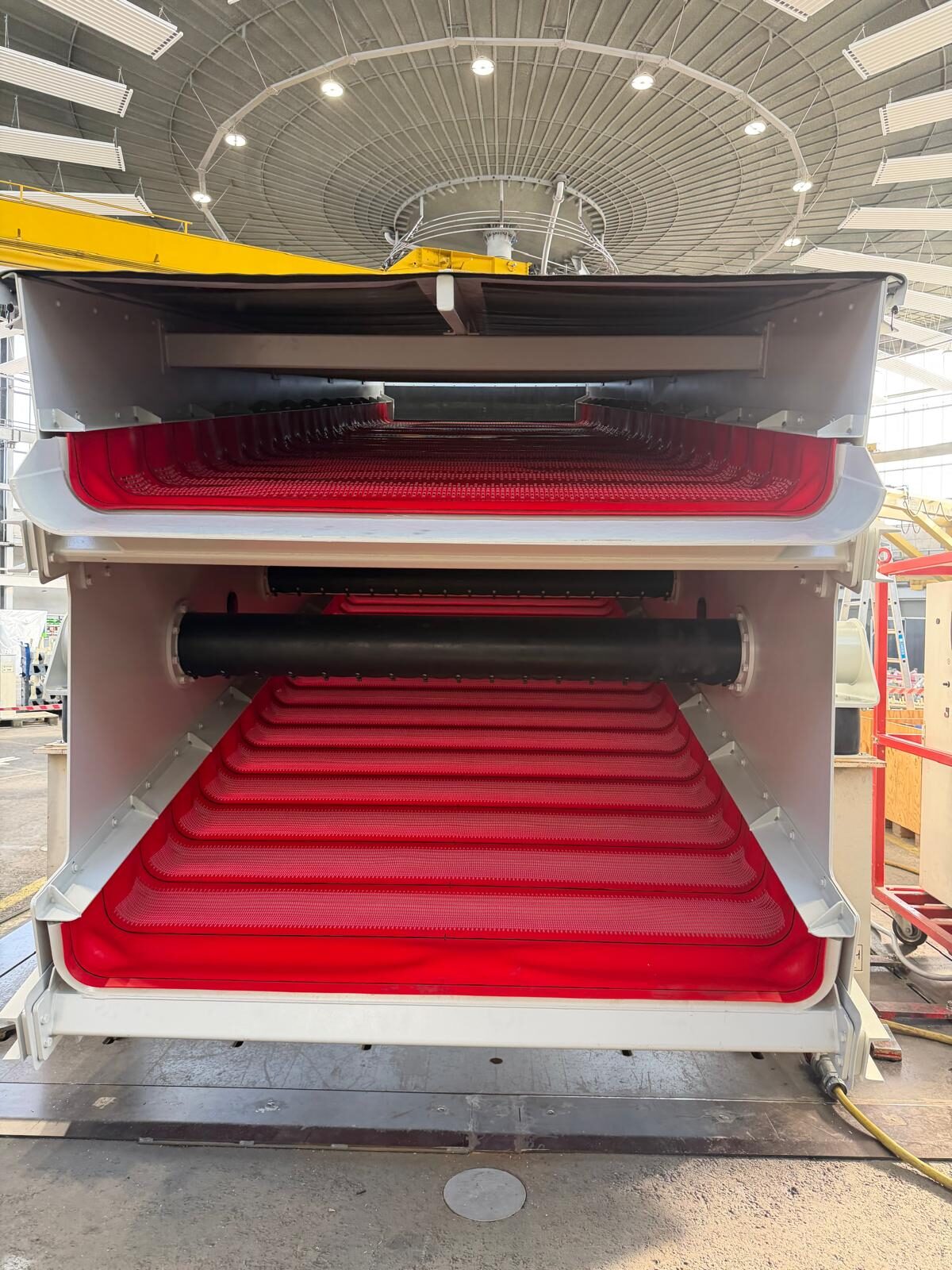
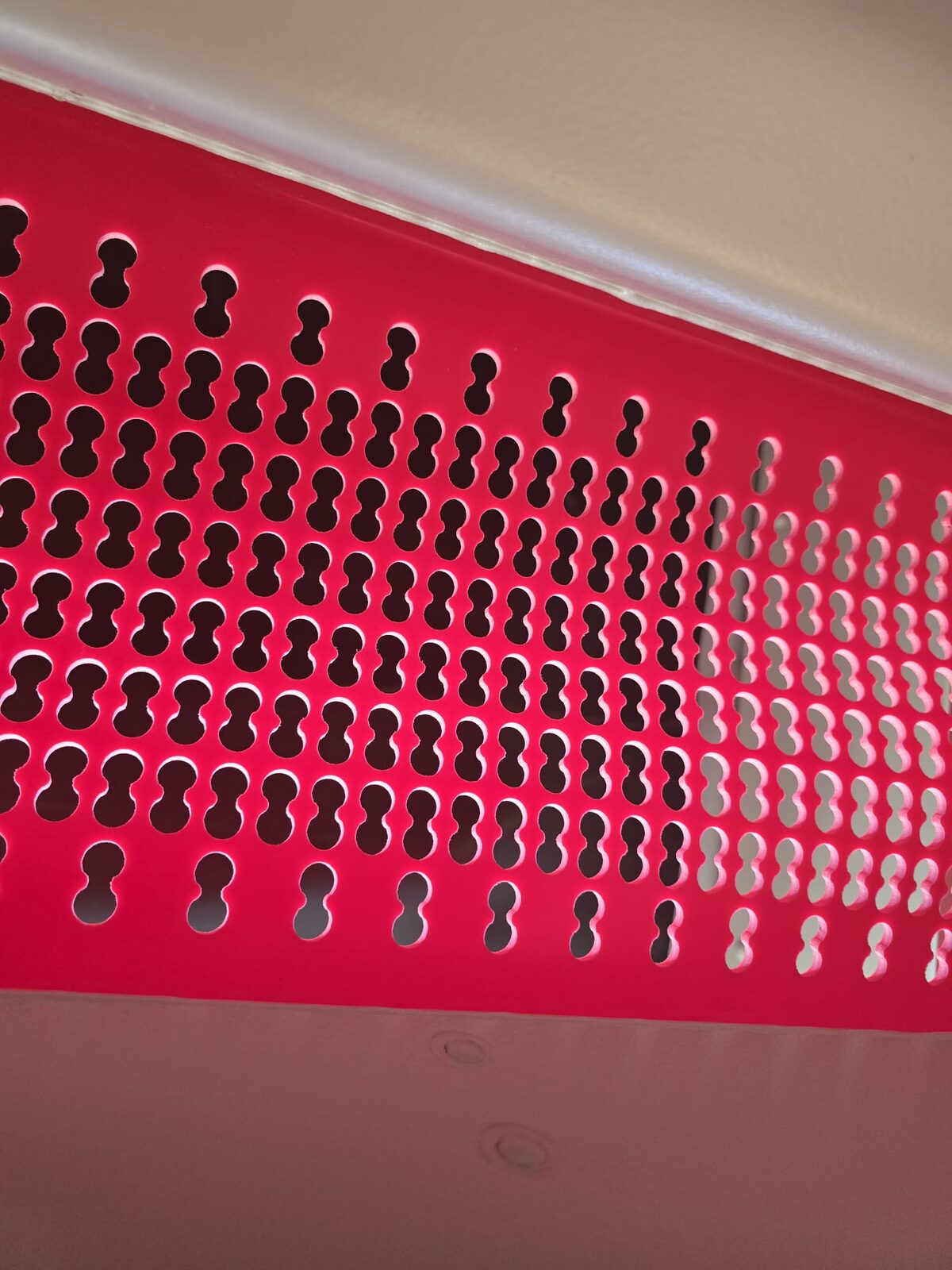
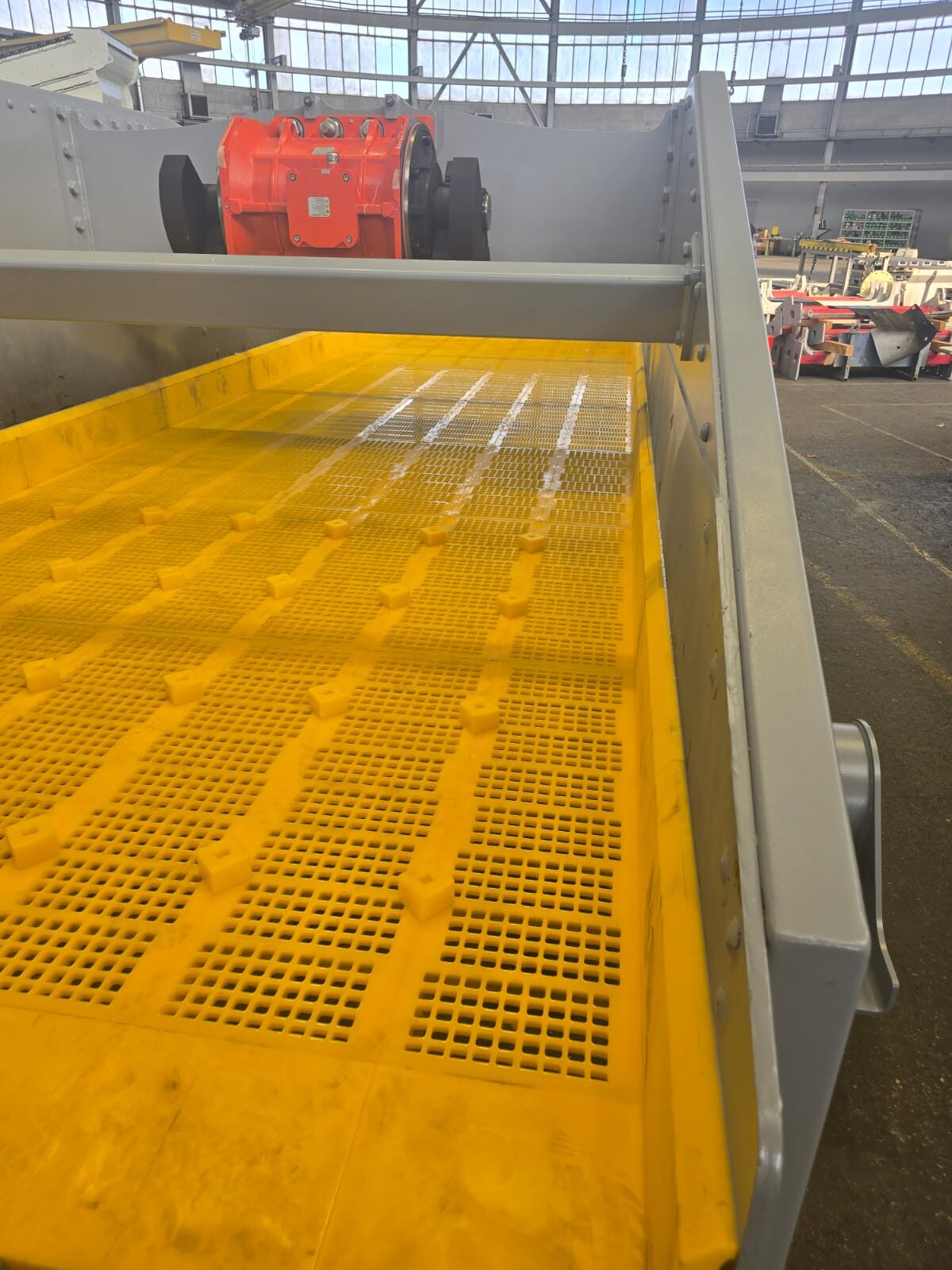
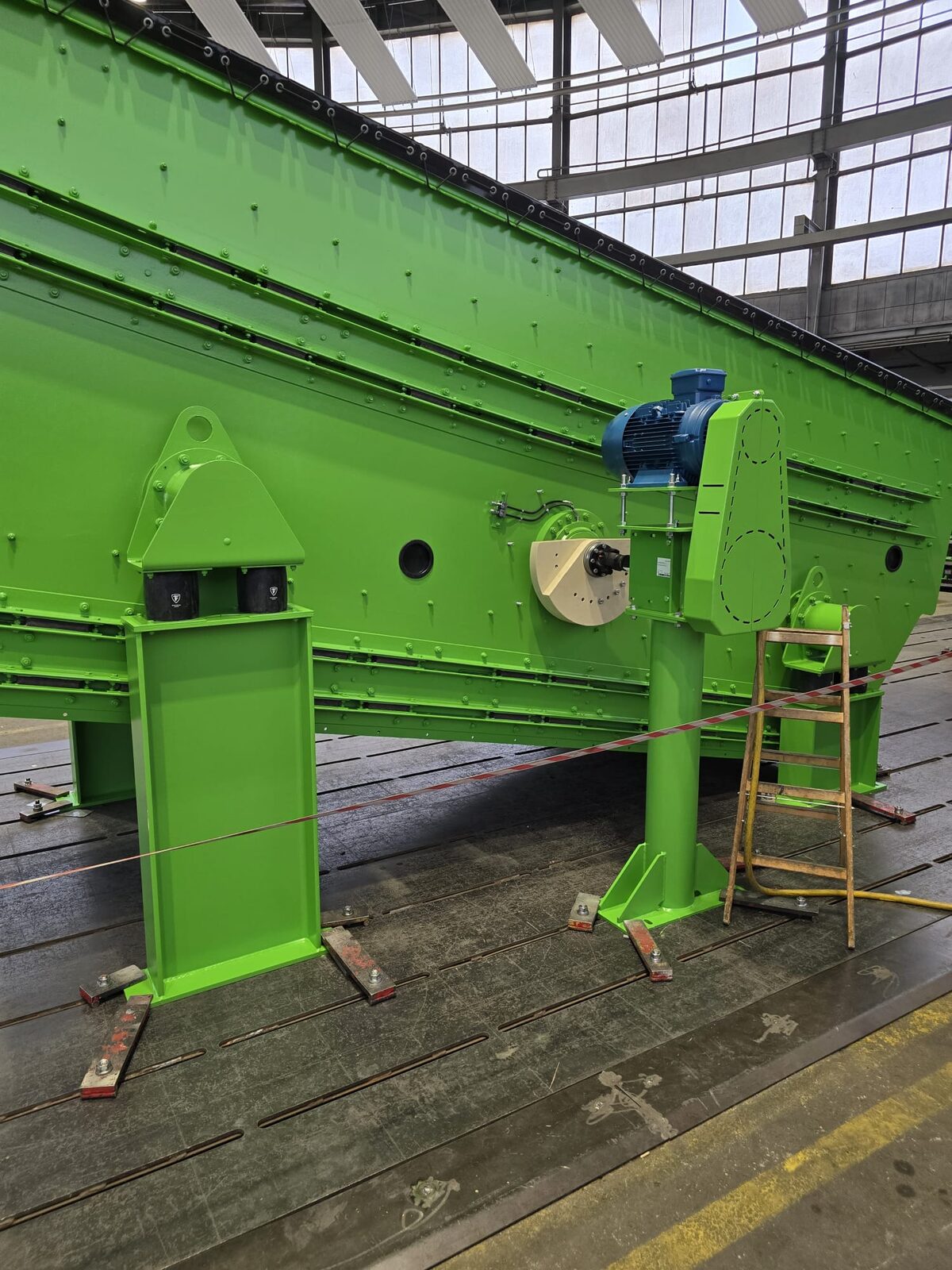
BIVITEC uses a dual-vibration, flip-flow action. The screen mats are fixed between cross-beams that move in opposite directions, so the mats continuously stretch and relax. That flexing produces accelerations far higher than a conventional vibrating screen, which keeps the apertures open and stops material building up on the deck.
In practice that means it can screen feeds that would quickly blind a standard screen: damp coal, sandy clay, compost, glass and other moist or stalky material. The blinding rate stays low and the machine holds throughput where a conventional screen would clog and stop.
A screwless mat-fixing design means a screen can be changed in well under an hour, so the maintenance penalty that usually comes with high-intensity screening is much smaller. For operators it adds up to longer run time between stoppages and a cleaner cut on difficult material.
Typically used for
- Damp and clay-bound feeds
- Coal
- Sand and minerals
- Compost and green waste
- Recovered paper
- Bulk materials